Blog for students in the 2nd year of Curricular Diversification Programme
Wednesday, 15 May 2019
Wednesday, 20 March 2019
Passive voice
1. Identify the subject,
verb, direct object and indirect object of the active sentence.
2. Make the first
object (or the second one!) the subject of the
passive sentence.
3. Which is the verbal
tense of the verb in the active voice? --> Put this tense in the
verb to be.
4. Write the verb of the
active voice in past participle.
5. The rest of the sentence
continues the same.
6. Add by +
the active subject (if it's relevant!).
* Take care with subject
pronouns and object pronouns!
READY TO PRACTICE? :)
Activity 1: Present simple and past simple passive.
Activity 2: Present simple, past simple, future simple and
present perfect passive
Activity 3: Rewrite the sentences from active to passive.
Anyway, don't get obsessed...
Wednesday, 13 March 2019
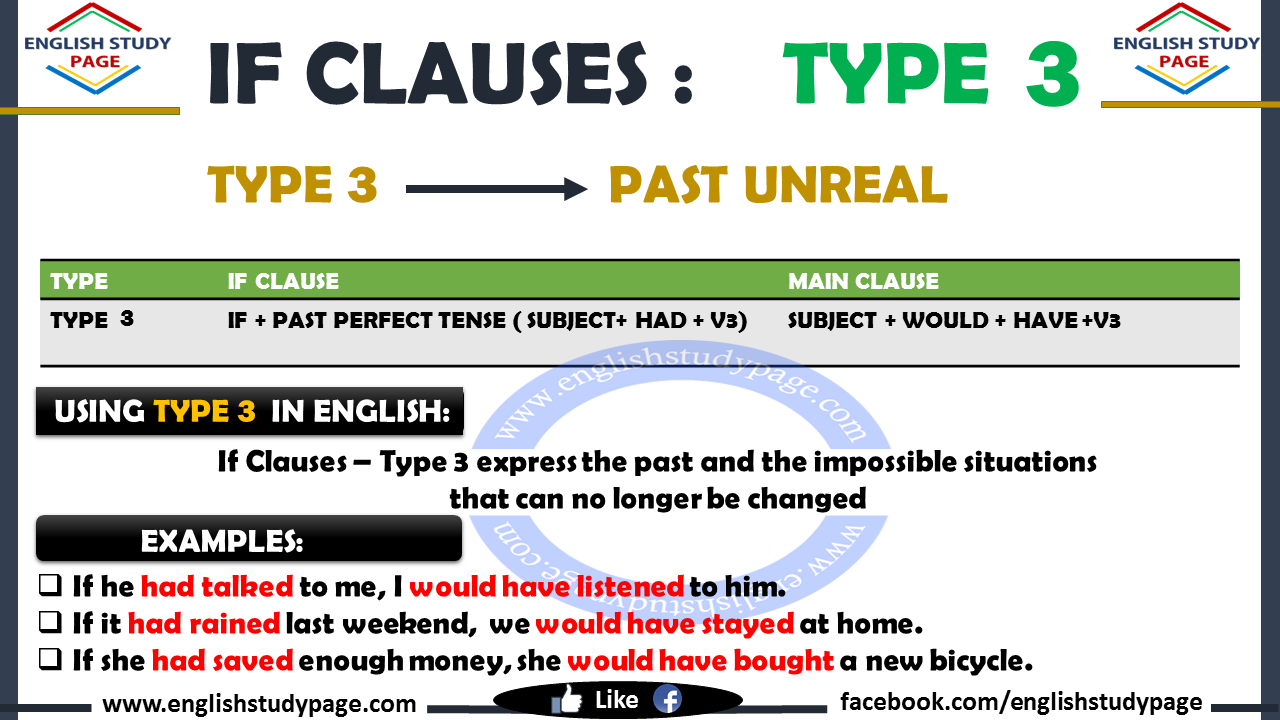
Third Conditional: no possibility or past unreal
The first conditional and
second conditionals talk about the future. With the third conditional we talk
about the past. We talk about a condition in the past that did not happen.
That is why there is no possibility for this condition. The third conditional
is also like a dream, but with no possibility of
the dream coming true.
Last week you bought a lottery
ticket. But you did not win. :
Condition
|
Result
|
|
Past Perfect
|
WOULD HAVE + Past
Participle
|
|
If
|
I had won the lottery
|
I would have bought a car.
|
Notice that we are thinking
about an impossible past condition. You did not win the lottery. So the
condition was not true, and that particular condition can never be true because
it is finished. We use the past perfect tense to talk about the impossible past
condition. We use WOULD HAVE + past participle to talk about the impossible
past result. The important thing about the third conditional is that both the
condition and result are impossible now.
Sometimes, we use should
have, could have, might have instead of would
have, for example: If you had bought a lottery ticket, you might
have won.
Look at some more examples in
the tables below:
IF
|
Condition
|
Result
|
past perfect
|
WOULD HAVE + past
participle
|
|
If
|
I had seen Mary
|
I would have told her.
|
If
|
Tara had been free yesterday
|
I would have invited her.
|
If
|
they had not passed their exam
|
their teacher would have been sad.
|
If
|
it had rained yesterday
|
would you have stayed at home?
|
If
|
it had rained yesterday
|
what would you have done?
|
Result
|
IF
|
Condition
|
WOULD HAVE + past
participle
|
past perfect
|
|
I would have told Mary
|
if
|
I had seen her.
|
I would have invited Tara
|
if
|
she had been free yesterday.
|
Their teacher would have been sad
|
if
|
they had not passed their exam.
|
Would you have stayed at home
|
if
|
it had rained yesterday?
|
What would you have done
|
if
|
it had rained yesterday?
|
Wednesday, 27 February 2019
Wednesday, 20 February 2019
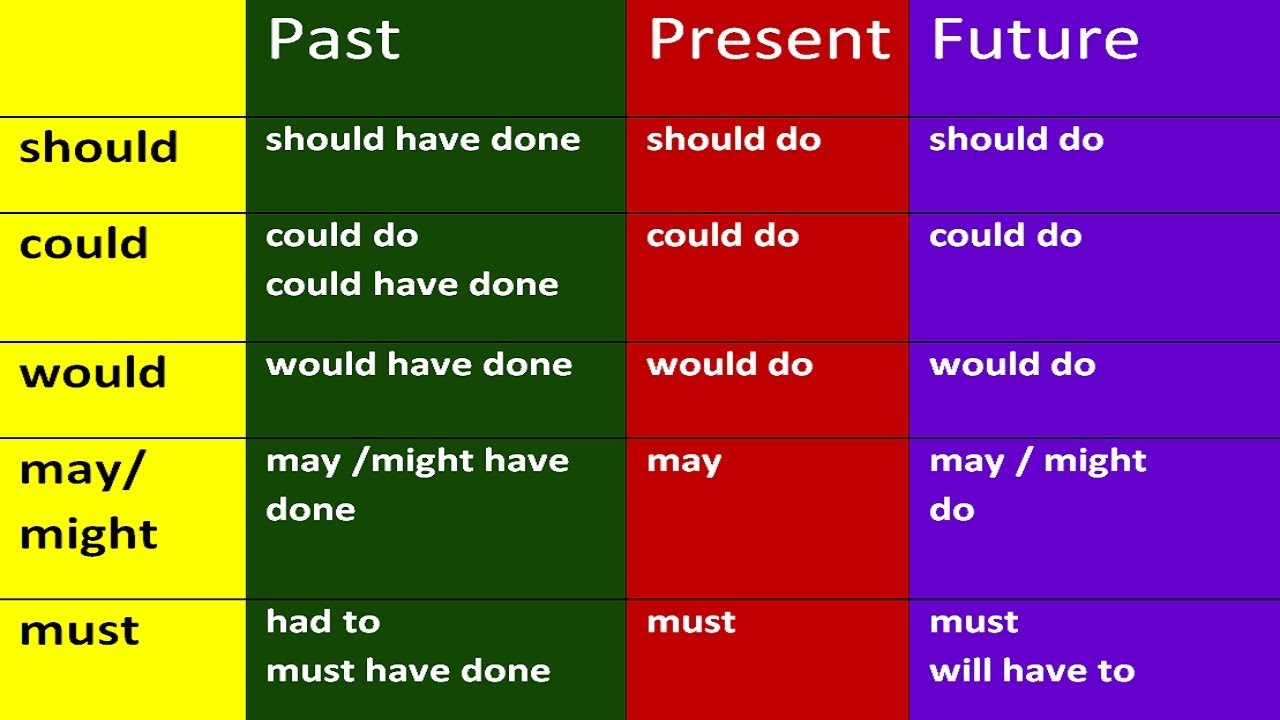
Modal verbs
* READY TO PRACTICE? ;)
- Activity 1: can't, must or might?
- Activity 2: can, could, may, might, must, mustn't or should?
- Activity 3: choose the correct option (short activity)
- Activity 4: modal verbs in negative.
- Activity 5: can, can't, must or mustn't?
- Activity 6: should or shouldn't?
Friday, 8 February 2019
Wednesday, 23 January 2019
Subscribe to:
Posts (Atom)